Sending a “petit bleu” to the world
For the last 20 years, I have been working on the art of French artist Yves Klein (1928-1962) and his influence on contemporary art.
What started out as an idea, has proved to become a study of a real influence on today’s artists practices for instance in the performative arts.
Pneumatics is the use of compressed air to create viable energy. Pneumatics have built-in air storage and rely on the pressure that ensues from putting the air within an enclosed space.
Think of when you blow up a balloon. You are putting air from your lungs into an enclosed rubber space. The balloon expands as it holds a fixed volume of air. If you add too much air, the balloon will pop. If you let it fly around, you can see it moving at a rapid rate. Balloons are not used in pneumatics, but you can witness the power of compressed air in action with such a demonstration.
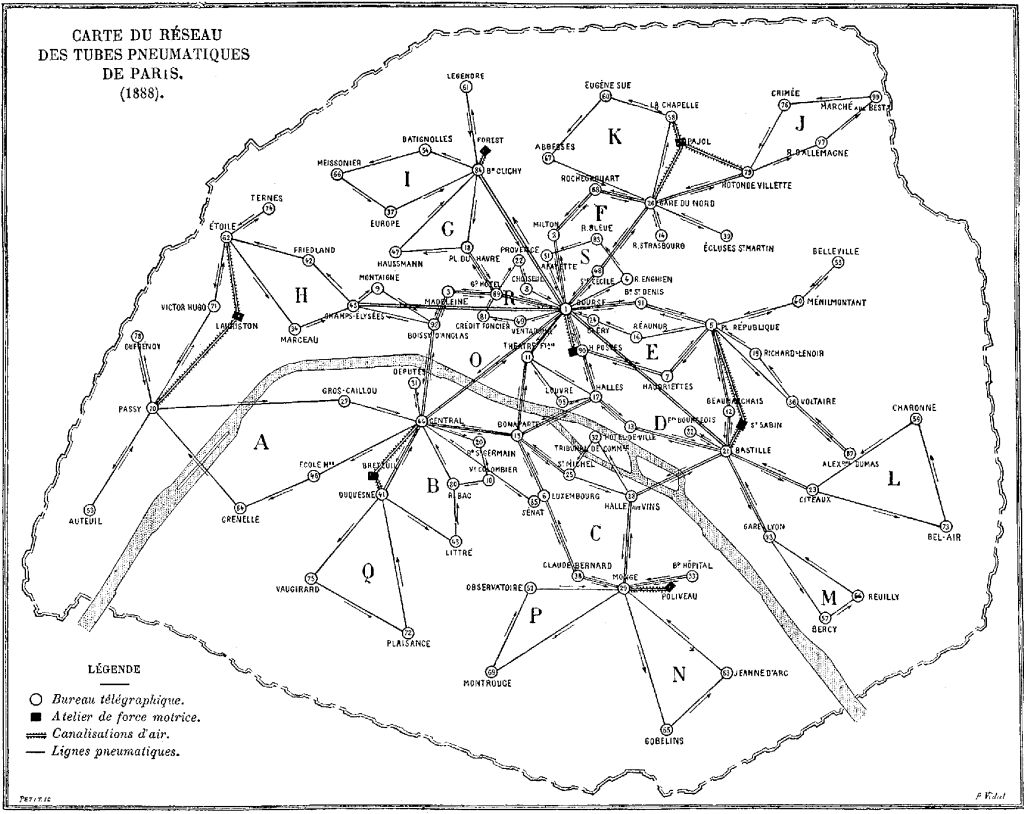
In Paris during the years 1868-1984, the pneumatic post was a very important feature, as it was in many other big cities. I have always found that network or reseau of communication deeply interesting.
This network was directed by the French Post (PTT) and allowed you to send a message in less than one hour inside Paris or Neuilly. The messages are called “pneus” or “petit bleus”. In 1933, the network reached a range of 427 km2.
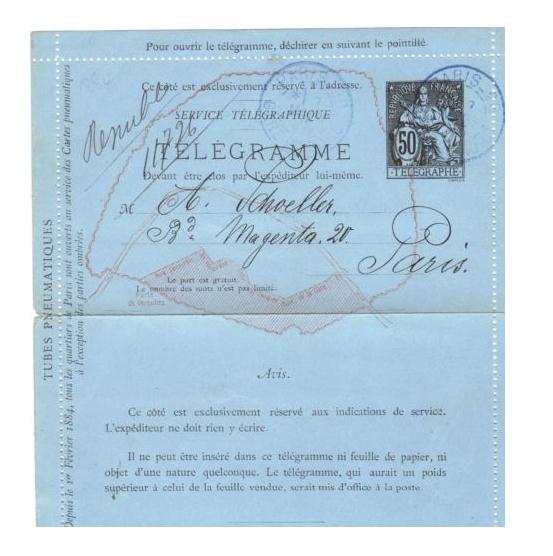
Powered by air, these messages represented a highly philosophical means of communication directly linked to the weightlessness and semiotic understanding of the urban space connecting the upper world with the network underneath the ground.
My challenge is now to develop an international exhibition and publication about the UN sustainable development goals (sdgs) with the theme of Architecture of air by Yves Klein. There is a clear link between the thoughts of sustainability of today and the very subtle, pneumatic network of yesterday’s big cities. In order to challenge and value communication in a “natural” way, a most sustainable means was invented, highly imaginative and based on the latest research.
At the same time, I am working on Yves Klein’s oeuvre and his influence on contemporary art. I want to link Klein’s work with climate change through the concept of Architecture of air which is also the name of my institution.
I have been a guest lecturer and researcher at the Tokai University in Tokyo, Japan, which has a specialism in Judo, and Judo was also an important concept in Yves Klein’s work. Judo is about energy and about putting it in the right place at the right moment. The same is to be said about the pneumatic communication of yesterday as well as about the use and power of air of today.
I am working on a collaborative project between different institutions in regards to showing the exhibition Architecture of Air both in Europe, in the US and in Japan.
My goal is that the exhibition could travel around with the help of air, and for the exhibition itself to be sustainable and comply with UN Goals.
My challenge is: how can I make a critical, sustainable exhibition from Architecture of air and hit the world public with its agenda?
How can I describe the importance of Klein’s work in regards to the world’s 2020 reality?
How can I create a sustainable, weightless institution based on Architecture of air? How can I incorporate sustainability in the structure of this new institution?
 Catherine Lefebvre